

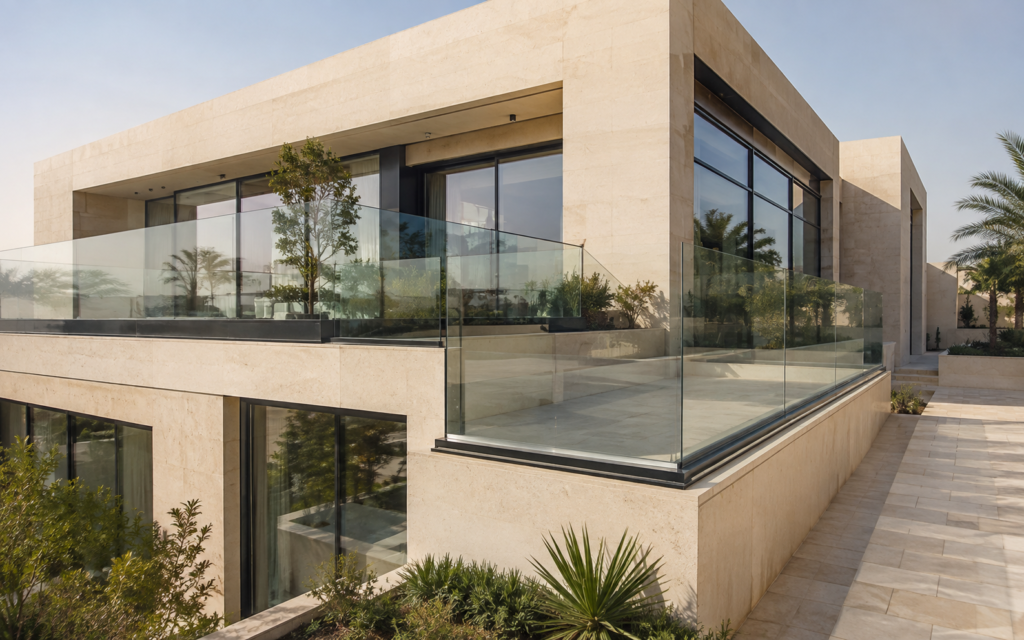
Glass railings have become a defining feature in contemporary architecture because they combine safety with openness, visibility, and a clean visual character.
For villas, offices, hotels, commercial spaces, staircases, balconies, and other architectural environments, glass railing systems can help create a lighter and more refined appearance without making the space feel visually heavy.
Their effectiveness, however, depends on correct glass selection, fixing systems, dimensions, detailing, and installation quality.
Why Glass Railings Work Well in Modern Architecture
Traditional railing systems can sometimes interrupt views or make interiors and balconies feel closed.
Glass railings provide protection while maintaining transparency, which allows the surrounding architecture, natural light, and views to remain more visible.
This makes them especially suitable for projects where design quality and visual openness are important.
1. Clear and Open Views
One of the biggest advantages of glass railings is the ability to maintain visibility.
On balconies, terraces, staircases, and elevated areas, glass panels provide necessary edge protection without creating a visually solid barrier.
This is especially useful for:
- Villas with landscaped views
- High-rise residences
- Hotels
- Commercial terraces
- Internal staircases
- Premium residential interiors
The result is a more open and spacious visual experience.
2. Better Natural Light
Glass allows light to pass through areas that would otherwise be visually blocked by solid railing materials.
In interior staircases, mezzanine levels, corridors, and atriums, this can help distribute natural light more effectively through the space.
For modern architecture, where openness and daylight are often important design priorities, this can make a major difference to the overall interior atmosphere.
3. Clean Architectural Appearance
Glass railings offer a simple and refined appearance that works well with modern materials such as stone, wood, stainless steel, aluminum, and architectural glass.
Depending on the project, systems can be designed with:
- Frameless detailing
- Minimal metal profiles
- Stainless steel handrails
- Side-mounted fittings
- Base-channel systems
- Customized architectural finishes
The correct system should complement the surrounding architecture rather than compete with it.
4. Suitable for Balconies and Staircases
Glass railing systems are highly versatile.
For balconies, they provide edge protection while preserving exterior views.
For staircases, they help maintain openness between different levels and can make the interior feel larger and more connected.
This makes glass railings suitable for both exterior and interior applications across residential and commercial projects.
5. Safety Depends on Correct Specification
The visual lightness of glass does not mean the system should be treated as a decorative feature only.
Railing systems are safety-critical architectural elements.
Important considerations include:
- Glass type
- Glass thickness
- Panel dimensions
- Railing height
- Fixing system
- Hardware specification
- Edge conditions
- Installation quality
The complete system should be selected according to the actual application and project requirements.
6. Frameless Systems Create a More Minimal Look
Frameless glass railings are popular in premium architecture because they reduce the amount of visible supporting material.
The glass becomes the dominant visual element, allowing the railing to feel almost transparent within the design.
They can work particularly well in:
- Luxury villas
- Modern staircases
- Balconies
- Rooftop terraces
- Hotels
- Premium commercial spaces
A frameless appearance requires especially accurate measurement, fixing, alignment, and finishing.
7. Metal and Glass Can Work Together
Not every project requires a fully frameless system.
Glass can be combined with stainless steel or other suitable architectural metal elements to create a stronger visual structure while still maintaining transparency.
This may include:
- Metal posts
- Handrails
- Side supports
- Base channels
- Custom brackets
The right combination depends on the architectural style and technical requirements of the project.
8. Glass Railings Can Make Small Spaces Feel Larger
Because transparent glass does not visually divide a space in the same way as solid railings, it can help compact interiors feel more open.
This is particularly valuable for:
- Narrow staircases
- Small landings
- Duplex apartments
- Compact villas
- Office interiors
- Mezzanine spaces
Maintaining visual continuity between areas can make the overall environment feel lighter and more spacious.
9. Maintenance Is Relatively Straightforward
Glass railings generally require simple routine cleaning to maintain their appearance.
Unlike some painted or decorative railing systems, glass does not require regular repainting.
However, maintenance should still include checking:
- Glass surfaces
- Fixing points
- Handrails
- Metal fittings
- Seals
- Alignment
Regular inspection is particularly important in frequently used commercial and public environments.
10. Installation Quality Defines the Final Result
The premium appearance of a glass railing depends heavily on installation quality.
Even small alignment problems, inconsistent spacing, poor joints, visible fixing errors, or uneven panel heights can reduce the quality of the finished result.
Professional execution should include:
- Accurate site measurements
- Proper glass preparation
- Correct fixing positions
- Consistent panel alignment
- Secure installation
- Clean joints
- Careful final finishing
Precision becomes especially important with frameless systems because there are fewer visual elements available to conceal inconsistencies.
Where Glass Railings Work Best
Glass railing systems can be used across a wide range of projects, including:
- Private villas
- Residential buildings
- Apartment balconies
- Internal staircases
- Commercial buildings
- Offices
- Hotels
- Retail environments
- Terraces
- Mezzanine levels
The appropriate system should always be selected around the location, expected use, architectural design, and technical requirements.
What to Consider Before Selecting a Glass Railing System
Before finalizing the system, review:
- Interior or exterior application
- Required railing height
- Glass specification
- Frameless or supported design
- Handrail requirements
- Fixing method
- Surrounding structure
- Exposure conditions
- Maintenance access
- Architectural finish
A properly coordinated system should achieve both safety and visual quality.
Final Thoughts
Glass railings can bring openness, natural light, clean detailing, and a refined architectural character to both residential and commercial spaces.
The best results come from balancing appearance with correct glass specification, secure fixing, precise installation, and careful finishing.
Global Prestige provides balcony and staircase glass railing solutions for modern architectural projects, with attention to system planning, glass preparation, installation, alignment, and final detailing.